Ronald Dullemans
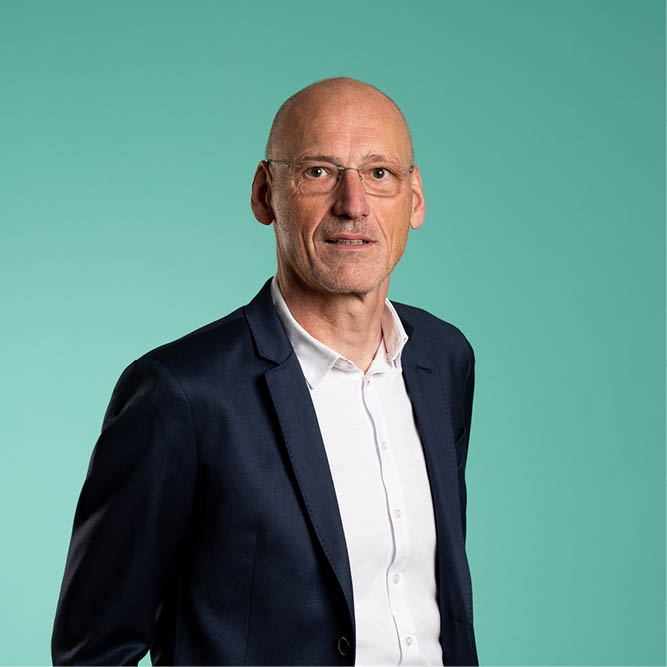
My name is Ronald Dullemans. I was 56 when this story began, married to Cecile and father to Tessa and Kas. We live in Rotterdam-Schiebroek. On Easter Sunday 2019, I walked five kilometres at a brisk pace with Cecile in the morning and cycled 40 kilometres with Tessa that afternoon. I felt fine. Over the following days, however, the whites of my eyes and my skin turned yellow, and the colour of my urine and stools changed. I was itchy all over and extremely tired. My son Kas, who was studying medicine and had just completed a module on the digestive system, liver and pancreas, urged me to see my GP immediately.
I took a urine sample, which was the colour of cola, to the GP. He was concerned and sent me straight to the emergency department at IJsselland Hospital in Capelle aan den IJssel. The hospital has a good reputation and works closely with Erasmus MC, which reassured me. I underwent several blood tests, an ultrasound and a CT scan. I was kept in overnight so that the doctors could speak to me at 1 pm the following day.
During that consultation, I learned that there was a four-centimetre tumour in the head of my pancreas. It was compressing the bile duct and causing the jaundice. At that point, the stage of the cancer was still unclear, so I was referred to Erasmus MC for further tests. A pancreatic cancer diagnosis brings enormous uncertainty. A football friend of mine had died from the same disease a few years earlier, so I knew how serious it was.
I wanted to be treated by Professor Casper van Eijck, a specialist in pancreatic cancer. We did everything we could to bring my case to his attention, and fortunately my first appointment was confirmed on the Monday after my diagnosis at IJsselland Hospital. The strange thing was that I did not feel ill during that time, although I looked increasingly unwell.
Despite the circumstances, my first conversation with Casper van Eijck gave me enormous confidence. He set out a clear treatment plan. I was eligible for the PREOPANC-2 study, which investigated whether chemotherapy before surgery was better than operating first. In my case, however, chemotherapy could not begin safely because my blood values did not reach the required level. Further tests showed that the tumour was growing into my duodenum and causing bleeding.
One Sunday, I messaged Casper van Eijck to say that I was not doing well. Within fifteen minutes, he replied that he wanted to see me at the outpatient clinic first thing the next morning. I did not yet know that he intended to operate. He told me: "You have always been active, you are fit and otherwise healthy. You can cope with this operation." I underwent surgery on 20 May 2019, less than a month after my diagnosis. The procedure began with keyhole surgery to check for metastases; if any had been found, the operation would have stopped. Fortunately, there were no visible metastases in other organs, so the surgical team could proceed with the Whipple procedure. I was able to go home within a week, probably because I had been so fit beforehand.
Six weeks later, I began chemotherapy: twelve treatments, each lasting two and a half days, at two-week intervals. The first went well, but every subsequent cycle was harder. I felt dreadful, with diarrhoea, vomiting and severe fatigue. I completed treatment shortly before Christmas 2019. By then, I had lost 18 kilograms and almost all my fitness. On a family skiing holiday that winter, the muscle loss meant I could manage no more than an hour on the slopes.
To rebuild my strength, I started oncology physiotherapy, focusing on resistance training to restore muscle rather than cardiovascular fitness. The fatigue persisted, however. In September 2020, I joined the BioCheck recovery programme, training three mornings a week for eighteen weeks. It gave me an enormous boost and improved my fitness so much that I was able to walk a half-marathon in October 2021.
In November 2020, I saw Professor Casper van Eijck and his patient Mariëlle Saers discussing dendritic cell therapy on the television programme 5 Uur Show. I contacted the hospital to ask whether I might be eligible for the study. In February 2021, I was invited to take part. I have now received four treatments, with my final treatment scheduled for November 2021. I feel positive, healthy and confident that I still have a long life ahead of me.
Pancreatic cancer is still too often a death sentence. My hope is that it will become a treatable disease with substantially better survival rates. I am deeply grateful to everyone who has helped me through my treatment so far.