Lotte Bos
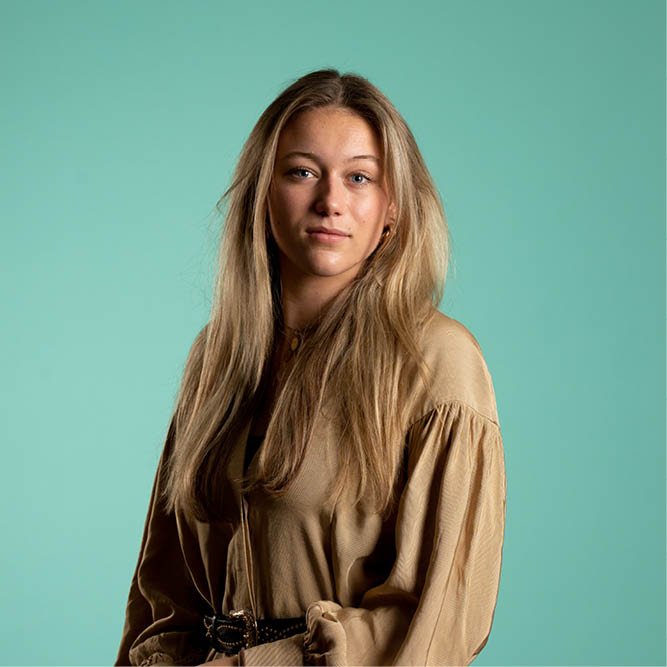
I'm Lotte Bos. I lost my father Theo to pancreatic cancer when I was eight. People often ask whether I can remember everything because I was so young, but I remember it all very clearly.
I was six when my father developed abdominal pain and went to hospital for tests. My parents did not tell me straight away because they first wanted to know whether it really was pancreatic cancer. Three days before Christmas in December 2011, Dad was diagnosed and told that he might have only three to six months to live. My first reaction was: “Daddy, are you going to die?” My parents said they did not know, but that Dad was going to fight. He told me: “I have fought and won many matches, and I am going to fight this one too.” From that moment, my childhood was turned upside down. I felt older than I was and, without fully realising it, I was constantly worried about Dad's illness. No child should have to carry that burden.
After his diagnosis, my brother, sister and I shared many wonderful moments with Dad and the rest of our family. He drove me everywhere, took me out for ice cream and came to hockey with me. My parents married on 31 March 2012, and it was a wonderful day.
My dad lived and breathed football. He was known as “Mister Vitesse” after spending many years at the club as both a player and coach. Even in his final year, he continued working as much as possible as manager of FC Dordrecht. During that period, he and Marcel van Roosmalen wrote the book Het is zoals het is — “It is what it is”. That was also how Dad regarded his pancreatic cancer: terrible luck, a fault in his DNA. He remained fit and mentally strong. In one interview he said: “If I did not know what I know, I would say I was fine. I will fight as I always did as a footballer. It will be an incredibly hard battle, but I want to win this match too.”
Professor Casper van Eijck was my father's doctor. Surgery was not possible because the tumour had grown around a major blood vessel, so chemotherapy was intended to shrink it. Casper helped us enormously. He explained everything clearly and took the time to describe in child-friendly language what was happening. He also gave me a booklet that made Dad's illness easier to understand. I am very grateful that he was there for us, both during my father's illness and afterwards.
Dad used to say: “I am going to beat the statistics. I will make it to Lotte's birthday.” He did, and we had 14 precious months together. Dad died on 28 February 2013. I miss him more at certain times, especially at important moments when I wonder what he would have thought or how proud he would have been of me. Fortunately, I can always talk to my mother about him.
I do not want other children to experience losing a parent to pancreatic cancer at such a young age. I hope an effective treatment can be found soon. That is why raising awareness and funding pioneering research matter so much.