Professor Rob Hoeben and Selas Bots
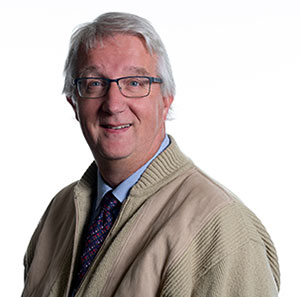
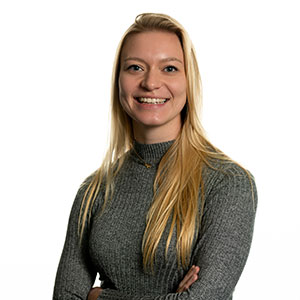 At Leiden University Medical Centre, Selas Bots has studied reovirus and adenovirus as possible oncolytic treatments since November 2017. Her work in Professor Rob Hoeben’s Virus and Stem Cell Biology laboratory examines how the viruses function and how they might be produced for clinical use. It also reveals more about the biology of the tumours they target.
Professor Hoeben, Professor of Gene Transfer in the Department of Cell and Chemical Biology, has been part of OVIT from the outset. He values the way tumour-immunology researchers test the viruses from their own specialist perspective, adding knowledge that no single group could produce alone. Strong support from patients is also an important vote of confidence in the research.
Reovirus can kill cancer cells, but many tumour cells are resistant. The team is studying two variants selected for improved activity. A mutation appears to disable a viral mechanism that normally prevents a particular form of cell death, allowing the selected virus to trigger it more readily. Because most people have encountered reovirus, many already carry antibodies against it; the team must determine how this existing immunity affects treatment and why it differs between individuals. Selas’s molecular work helps identify which variant should enter clinical development, and she produces viruses used by collaborating groups.
The researchers have also isolated adenoviruses from primates. Humans have not previously encountered these particular viruses and are therefore less likely to have existing immunity. Knowledge gained from the clinical use of human adenoviruses provides a useful foundation. The team has selected a tumour-specific variant that reproduces particularly well in cancer cells and activates the patient’s immune system. They are now gathering the evidence required for ethical review and future clinical trials.
Research will continue after the Erasmus MC virus-production facility opens. Leiden University Medical Centre can begin producing the first adenovirus for testing in different models, with biological safety, environmental risk and patient safety at the centre of the programme. Selas says: A substantial body of evidence indicates that adenoviruses can be used safely and effectively. The next step is to manufacture a clinical batch while continuing to refine the virus. We hope to begin clinical trials within a few years. Developing the viruses ourselves gives us control of the entire process and allows us to document it thoroughly, producing valuable knowledge for pancreatic cancer treatment and other applications.