Dr Freek van ’t Land
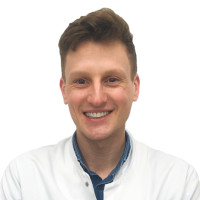 Following promising initial results, the study of dendritic cell therapy for pancreatic cancer entered its next phase. Freek van ’t Land began his PhD at Erasmus MC under Professor Casper van Eijck, focusing on establishing the treatment’s effectiveness. Freek says: "Approval has been granted to treat a larger group and several new participants have begun therapy. I hope we can trigger an immune response in this group that helps the body clear tumour cells."
Freek qualified as a doctor at Erasmus University Rotterdam in 2019. After working as a junior doctor in the Department of Surgery at Maasstad Hospital, he returned to Erasmus MC for his PhD. He explains: “Support Casper previously reported a promising breakthrough in Professor Casper van Eijck's study of dendritic cell therapy, conducted with Sai Ping Lau. The team was the first in the world to apply the therapy safely and successfully in pancreatic cancer. I am now continuing that work and supervising the second group of patients. Treating more people will allow us to draw firmer conclusions about effectiveness. I hope the results will be comparable to the first phase, providing further evidence that this therapy can benefit patients. The disease has not returned in many of those already treated, and I strongly believe in the treatment's potential.”
Hope
What exactly is dendritic cell therapy? Freek explains: “Dendritic cells are white blood cells that help the immune system recognise and destroy a tumour. Cancer can disrupt this response, so the therapy is designed to support it. We collect blood from the patient and isolate cells that are developed into dendritic cells. These are activated with proteins also found on tumour cells and injected back into the patient, rather like a vaccine. They then stimulate killer T cells to identify and attack the cancer. The first phase showed that the approach works, but we need data from a larger group before drawing robust conclusions. We are also studying dendritic cell therapy in combination with another medicine, as the two treatments may reinforce one another. The first phase will increase the dose carefully to assess safety. It is an exciting time for both the team and the patients, and the opportunity to offer hope is an important start.”