23 September 2024
Professors combine their expertise in new research
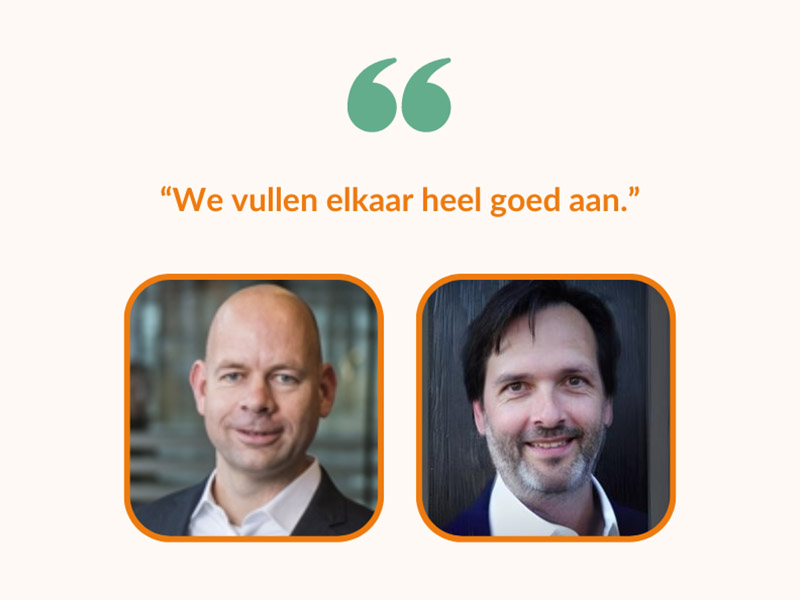 Cell biologist Professor Alfred Vertegaal and immunologist Professor Thorbald van Hall have joined forces to search for a more effective treatment for pancreatic cancer. Their new study, conducted at Leiden University Medical Centre and funded by Support Casper, will investigate whether combining a new generation of chemotherapy with immunotherapy can strengthen the effect of both treatments.
Directing processes within the cell
Professor Vertegaal has studied SUMO proteins and related proteins for more than twenty years. Proteins perform many different functions inside and outside our cells, from metabolism and transport to communication. SUMO and its relative ubiquitin regulate important processes in the cell nucleus, including cell division, by attaching themselves to other proteins and changing how those proteins behave.
Vertegaal and fellow cell biologists discovered that SUMO proteins also play an important role in tumour immunology. Inhibiting them can disrupt tumour-cell division. In experiments involving mice with pancreatic cancer, this slowed tumour growth without causing serious toxic side effects. The new study will examine whether this targeted form of chemotherapy becomes more effective when combined with different types of immunotherapy.
Helping the immune system fight cancer
Professor Van Hall began his doctorate in tumour immunology thirty years ago, when the idea that the immune system could fight cancer was not yet widely accepted. Immunotherapy has since become an established treatment for several cancers, but it is not yet effective enough against pancreatic cancer.
This laboratory study will test SUMO inhibitors alongside three immunotherapy approaches: dendritic cell therapy and two forms of checkpoint therapy. Dendritic cells can teach other immune cells to recognise and attack cancer cells. Checkpoint therapies influence molecular switches that regulate the immune response. One approach releases the immune system's brakes, while another actively presses the accelerator.
When one plus one makes three
The researchers hope the combination will make immunotherapy more effective against pancreatic cancer. Their partnership also brings together two different scientific perspectives. Vertegaal's expertise lies in processes within individual cells, while Van Hall focuses on the immune response. Each sees the research through a different lens, helping both to identify possibilities they might otherwise miss.
During the two-year project, the team will look for a combination that both activates the immune system and kills tumour cells directly. If the treatments reinforce one another, the work could provide an important step towards a more effective treatment for pancreatic cancer.