26 August 2025
Rob cycles 1,200 kilometres to Mont Ventoux for Support Casper
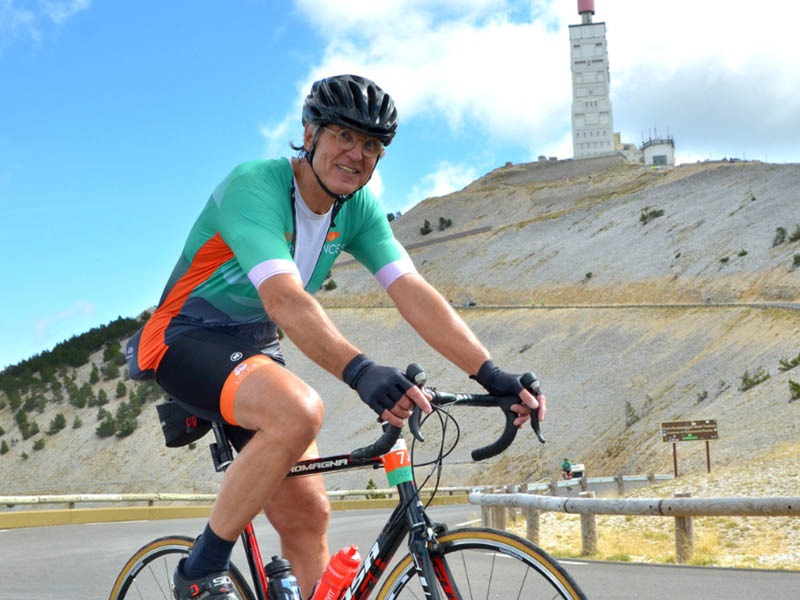
The Hague, 25 August 2025 — On 31 August, Rob van Ravensteijn (61) will set off from his home city of The Hague and cycle to Mont Ventoux under the motto “Ain't no mountain high enough”. There he will join the Tour de Pancreas. Rob was diagnosed with pancreatic cancer ten years ago. After several operations and courses of chemotherapy, he is grateful to be able to enjoy life. By taking on this demanding ride for Support Casper, he hopes to help bring effective treatments closer.
Rob enjoys a sporting challenge. In winter, he skates laps at De Uithof; in summer, he takes his touring bike on long rides. He first joined the Tour de Pancreas two years ago to raise money for Support Casper and challenged himself to climb Mont Ventoux twice.
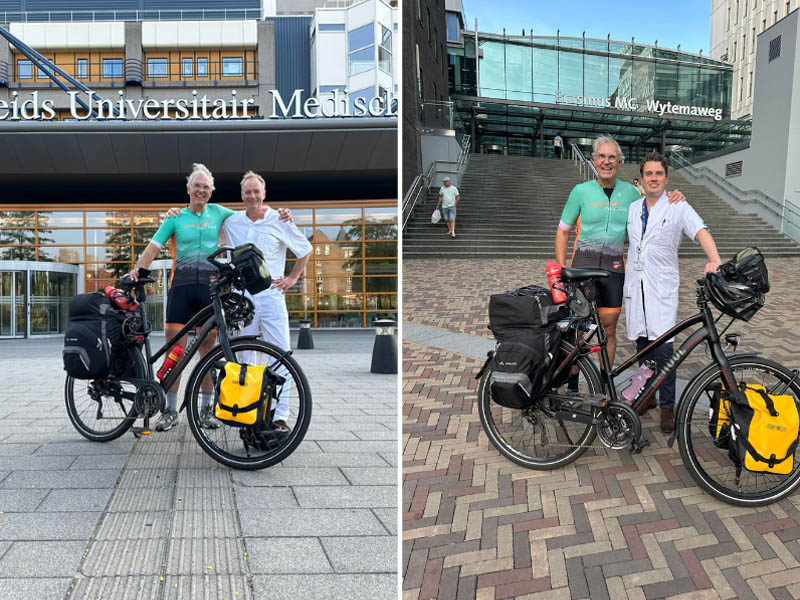
This year marks both Support Casper's tenth anniversary and ten years since Rob's diagnosis. He credits his survival to the dedication of his doctors, Dr Bert Bonsing of LUMC and Professor Casper van Eijck of Erasmus MC, who will also take part in this year's Tour de Pancreas. Rob will cycle 1,200 kilometres with luggage to Vaison-la-Romaine, at the foot of Mont Ventoux, before joining the fundraising event.
Tour de Pancreas 2025
On Saturday 13 September, Tour de Pancreas participants will climb Mont Ventoux once, twice or three times, either on foot or by bicycle, while raising money to fight pancreatic cancer. Around 3,000 people in the Netherlands are diagnosed each year and eight to ten die from the disease every day. That is why the pioneering research led by Professor Casper van Eijck is so urgently needed.
About Support Casper
Cancer treatment has advanced significantly, but the outlook for people with pancreatic cancer remains poor. Professor Casper van Eijck, a specialist at Erasmus MC for more than 30 years, has made it his mission to find effective treatments. Since 2015, Stichting Overleven met Alvleesklierkanker has used the Support Casper campaign to fund pioneering research and raise awareness. Its ambition is to help make effective, affordable treatment available to every patient by 2030. The research team is already seeing promising results from virotherapy and immunotherapy.