27 October 2025
Infrastructure of knowledge and expertise
Research at the highest possible level
Research teams often have to start partly from scratch with each new project. Immunotherapy research at Erasmus MC is organised differently: a permanent group of specialists contributes to successive studies. Preserving this expertise delivers benefits at every stage.
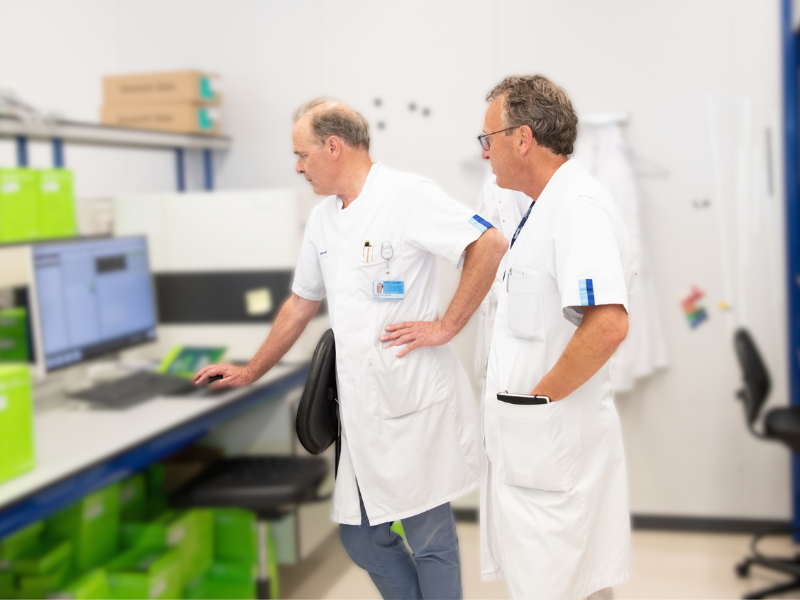
A permanent team is highly valuable but difficult to fund in academic research. Grants usually cover a single project, after which researchers take their knowledge and experience elsewhere. Support from the foundation gives immunotherapy research greater continuity. Professor Joachim Aerts, head of Pulmonology at Erasmus MC, has worked with the same specialist team for many years. "This includes researchers, research nurses and laboratory analysts," he explains. "Their expertise is highly specialised and difficult to replace. In Rotterdam, we have a well-equipped laboratory, advanced technology and the people who know how to use it."
This lasting network of knowledge and expertise helps the team investigate, test and ultimately deliver better treatments. Continuity saves a great deal of time—particularly important for people with cancers that still carry such a poor prognosis.
Breaking down the barrier
What connects pulmonology with pancreatic cancer? Joachim explains: "As Professor of Thoracic Oncology, I have studied cancer immunology for twenty years, and its principles apply across different tumour types. When I began, very few people believed in cancer immunotherapy. Thankfully, that has changed and it is now a standard part of treatment for several cancers. Casper van Eijck and I share a strong interest in immunology, which created an immediate connection despite our different clinical specialties."
They also discovered an important similarity between mesothelioma and pancreatic cancer. Both tumours contain large amounts of connective tissue. This tissue forms a barrier that can prevent immune cells from reaching or even recognising the cancer. Research into breaking down this barrier may therefore benefit people with either disease.
Keeping experienced researchers involved in follow-up studies is especially valuable when several clinical trials run at the same time. A permanent team is more cost-effective because analytical work overlaps, and new findings can be incorporated into follow-up research immediately. Most importantly, promising treatments can reach patients sooner. The team follows the same rigorous research process as anyone else, but its infrastructure allows it to move through that process more efficiently.
Long-term value
As well as saving time and money, the structure supports stronger science. "Our combined knowledge and expertise allow us to conduct research at the highest possible level," says Joachim. "This produces deeper understanding and new insights." Findings from the team’s laboratories supported a major article on dendritic cell therapy in The Lancet Oncology. Publications of this calibre strengthen the research further and attract international attention.
Joachim regards the partnership with the foundation as crucial. "Knowing that funding is available for the next two or three years lets us plan for the long term and think more ambitiously. That is unusual for a researcher. Instead of a sequence of isolated projects, we have a shared objective on the horizon. The foundation’s active involvement is also extremely motivating."