11 July 2024
Dendritic cell therapy shows promise in pancreatic cancer
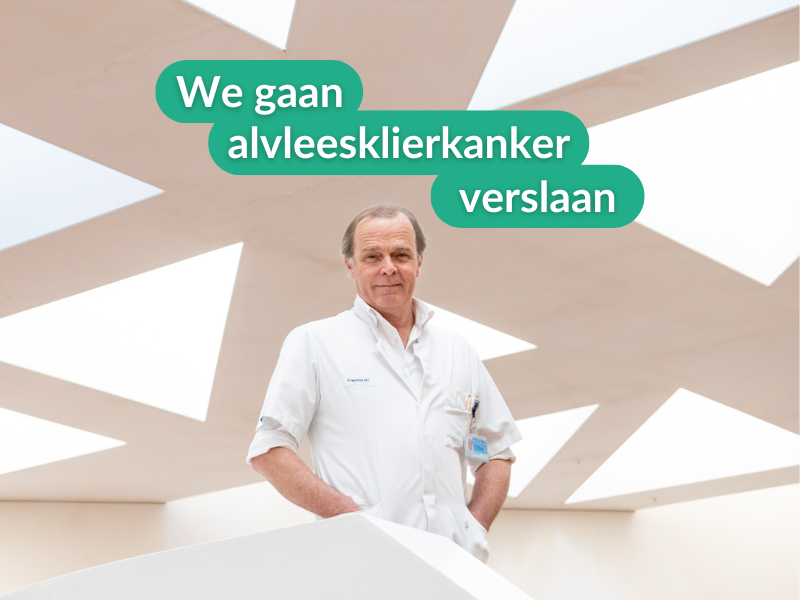
Leading Journal of Clinical Oncology publishes results research
This month, the renowned Journal of Clinical Oncology published the results of a follow-up study into dendritic cell therapy for pancreatic cancer. In this form of immunotherapy, immune cells are taken from the patient, stimulated outside the body and then returned to help the immune system recognise and attack cancer cells. The study, carried out by Dr Freek van ’t Land under the supervision of Professors Joachim Aerts and Casper van Eijck, assessed the treatment in a larger group of patients who were cancer-free after surgery. After two years, 26 of the 38 participants (64%) remained tumour-free. This is a promising result because pancreatic cancer often returns within that period. The findings also show that dendritic cell therapy can activate specific immune cells capable of targeting tumour cells over the longer term.
You can read the full study in the Journal of Clinical Oncology here.
Increasing evidence
Pancreatic cancer is one of the deadliest forms of cancer, with fewer than 5% of patients alive five years after diagnosis. Casper van Eijck and his research team began exploring immunotherapy several years ago, and this follow-up study provides further evidence that the approach is worth pursuing. In a commentary accompanying the article, Dr Eileen O. Reilly — a pancreatic cancer specialist at Memorial Sloan Kettering Cancer Center in New York — writes that the study adds to growing evidence that immunotherapy can produce both a strong immune response and an early clinical signal that merits further investigation.
More effective
Professor Casper van Eijck explains: “Dendritic cells present tumour proteins to immune cells, activating them to clear tumour cells. At present we use general tumour proteins, but in future we want to target the treatment much more precisely. This study confirms that the principle works; we can now focus on making it even more effective. It provides the basis for a follow-up study involving 120 participants. We also want to administer the dendritic cells earlier, rather than only after chemotherapy, six to nine months after surgery, as in the published study. We expect that starting sooner will produce even better results. We are immensely grateful to the patients who took part. It is an intensive study and we could not have completed it without them.”
The study was made possible with financial and practical support from Erasmus MC, the Top Consortia for Knowledge and Innovation (TKI), Amphera B.V. and Stichting Overleven met Alvleesklierkanker (Support Casper).
About Support Casper
Cancer treatment has advanced significantly, yet the outlook for people with pancreatic cancer remains poor. Professor Casper van Eijck, a specialist at Erasmus MC for more than 30 years, has made it his mission to find effective treatments for the disease. Since 2015, Stichting Overleven met Alvleesklierkanker has used the Support Casper campaign to fund pioneering research and raise awareness. Its ambition is to help make an effective, affordable treatment available to every patient by 2030. The research team is already seeing promising results from virotherapy and immunotherapy.